
These vegetable spring rolls are all about that satisfying crunch, the kind that makes you pause and really notice each bite. It’s not just about looking pretty—though they do—they’re about balancing raw, fresh textures with a whisper of crispness that keeps your palate interested. I love the way the cool, crunchy veg contrasts with the warm, slightly sticky rice paper; it’s a little dance in every roll.
What really draws me in is how versatile they are. You can swap in whatever veg you’ve got—think crisp cucumbers, sweet bell peppers, or even some tender carrots. It’s a recipe that invites creativity but still demands respect for that delicate balance of texture and brightness. Plus, they’re perfect for a quick snack or a light, fresh appetizer that feels almost celebratory without any fuss.
Focusing on the art of balancing fresh, raw textures with just the right amount of crispness, these spring rolls are less about presentation and more about the satisfying crunch and vibrant flavors that make each bite feel alive.
Craving Crunch and Freshness
- These rolls remind me of summer afternoons at my grandma’s house, where she’d always have a fresh platter waiting.
- Crunching into a perfectly fresh vegetable spring roll still makes my heart skip a beat, even after making them dozens of times.
- I love the chaos of chopping all the colorful veg, it feels like a mini celebration every time I prep.
- There’s a quiet pride in getting that rice paper just right—soft enough to roll but firm enough to hold together.
- Sometimes, I crave these because they’re a simple reminder that fresh ingredients can turn into something special without much fuss.
The story behind this recipe
- These spring rolls came about on a rainy afternoon when I was craving something fresh but didn’t want to turn on the stove. I had a bunch of crunchy veggies in the fridge and some rice paper that was just begging to be used. It’s funny how a simple idea can turn into a ritual—rolling these as a way to slow down for a moment.
- What started as a quick snack became a way to reconnect with the joy of raw, vibrant ingredients. I remember the first time I made them, I was surprised how much flavor and texture you get just from fresh veg and a little dipping sauce. Over time, they’ve become my go-to for light lunches and spontaneous gatherings, always a hit because they’re so unfussy and forgiving.
- heading:
Trivia and Historical Tidbits
- Vegetable spring rolls originated in Southeast Asia, with Vietnam popularizing their fresh, raw style as a healthy street food.
- The concept of wrapping raw ingredients in rice paper dates back centuries, reflecting a tradition of light, portable meals in warm climates.
- These rolls are a modern take on ancient rice paper techniques, emphasizing fresh herbs and crisp vegetables for a vibrant experience.
Key ingredients and tips
- Rice paper: I love the delicate snap it gives, but if yours feels too stiff, soak it in warm water until just pliable—watch for that perfect soft, translucent look.
- Carrots: Crunchy and sweet, I prefer shredded for even texture, but julienne strips work great if you want more bite and visual appeal.
- Cucumbers: Crisp and refreshing, I always seed them well—less watery, more satisfying bite. Skip if you want a milder crunch.
- Red peppers: Brightly sweet and slightly smoky if charred, but raw adds a beautiful pop of color and sweetness—no need to cook.
- Fresh herbs: Cilantro and mint are must-haves for that fragrant, lively aroma—use generously, they really wake up each bite.
- Dipping sauce: A simple soy and rice vinegar mix with a splash of sesame oil makes everything sing—feel free to add a dash of chili for heat or lime for brightness.
- Optional extras: Tofu or cooked shrimp can turn these from snack to meal—just keep them light so the roll stays manageable.
Spotlight on key ingredients
Rice paper:
- I love how translucent and delicate it feels, almost like it’s barely there. Soak just enough for flexibility—too soft and it tears, too stiff and it won’t roll smoothly.
- Cucumbers: They add that crisp, clean burst of freshness. Seed them well; otherwise, they can make the roll soggy and watery, which is a mood killer.
Fresh herbs:
- Carrots: Shredded carrots bring a satisfying crunch and a hint of sweetness. Julienne strips work well if you want a more dramatic, bite-sized texture.
- Cilantro and mint are essential for that fragrant, lively aroma. Use generously—those herbaceous notes really lift the whole bite, making it feel fresh and vibrant.
Notes for ingredient swaps
- Rice paper: I love the delicate snap it gives, but if yours feels too stiff, soak it in warm water until just pliable—watch for that perfect soft, translucent look.
- Carrots: Crunchy and sweet, I prefer shredded for even texture, but julienne strips work great if you want more bite and visual appeal.
- Cucumbers: Crisp and refreshing, I always seed them well—less watery, more satisfying bite. Skip if you want a milder crunch.
- Red peppers: Brightly sweet and slightly smoky if charred, but raw adds a beautiful pop of color and sweetness—no need to cook.
- Fresh herbs: Cilantro and mint are must-haves for that fragrant, lively aroma—use generously, they really wake up each bite.
- Dipping sauce: A simple soy and rice vinegar mix with a splash of sesame oil makes everything sing—feel free to add a dash of chili for heat or lime for brightness.
- Optional extras: Tofu or cooked shrimp can turn these from snack to meal—just keep them light so the roll stays manageable.
Equipment & Tools
- Large shallow dish: To soak rice paper evenly and prevent tearing.
- Damp towel: To keep rice paper moist and manageable.
- Cutting board or plate: For placing finished rolls and slicing if needed.
- Sharp knife: To cut rolls cleanly without squishing.
Step-by-step guide to spring rolls
- Gather all ingredients: rice paper, chopped vegetables (cucumbers, carrots, peppers), herbs, and dipping sauce. Have a clean damp towel ready for rolling.
- Fill a large shallow dish with warm water (about 40°C / 105°F). Dip one rice paper sheet for about 5 seconds until pliable but not too soft—look for translucence.
- Lay the damp rice paper flat on the towel. Place a small handful of vegetables near the bottom third of the sheet.
- Add a few fresh herbs on top of the veggies—cilantro and mint are my favorites for aroma and brightness.
- Fold the sides of the rice paper inward, then roll tightly from the bottom, keeping the filling snug. Seal the edge with a gentle press.
- Repeat with remaining sheets. Keep finished rolls covered with a damp towel to prevent drying out.
- Serve immediately with your favorite dipping sauce. If making ahead, refrigerate covered for up to 2 hours; avoid freezing as texture will suffer.
- For best presentation, cut the rolls in half diagonally just before serving. Watch for the vibrant colors and fresh, crunchy textures.
Serve the rolls immediately for crunch and freshness. If making ahead, cover with plastic wrap and refrigerate for up to 2 hours. Slice in half diagonally for an appealing presentation.
How to Know It’s Done
- Rice paper is translucent and pliable without tearing.
- Filling is snug but not overstuffed, rolls hold shape without cracking.
- Vegetables stay crisp and vibrant, not wilted or soggy.
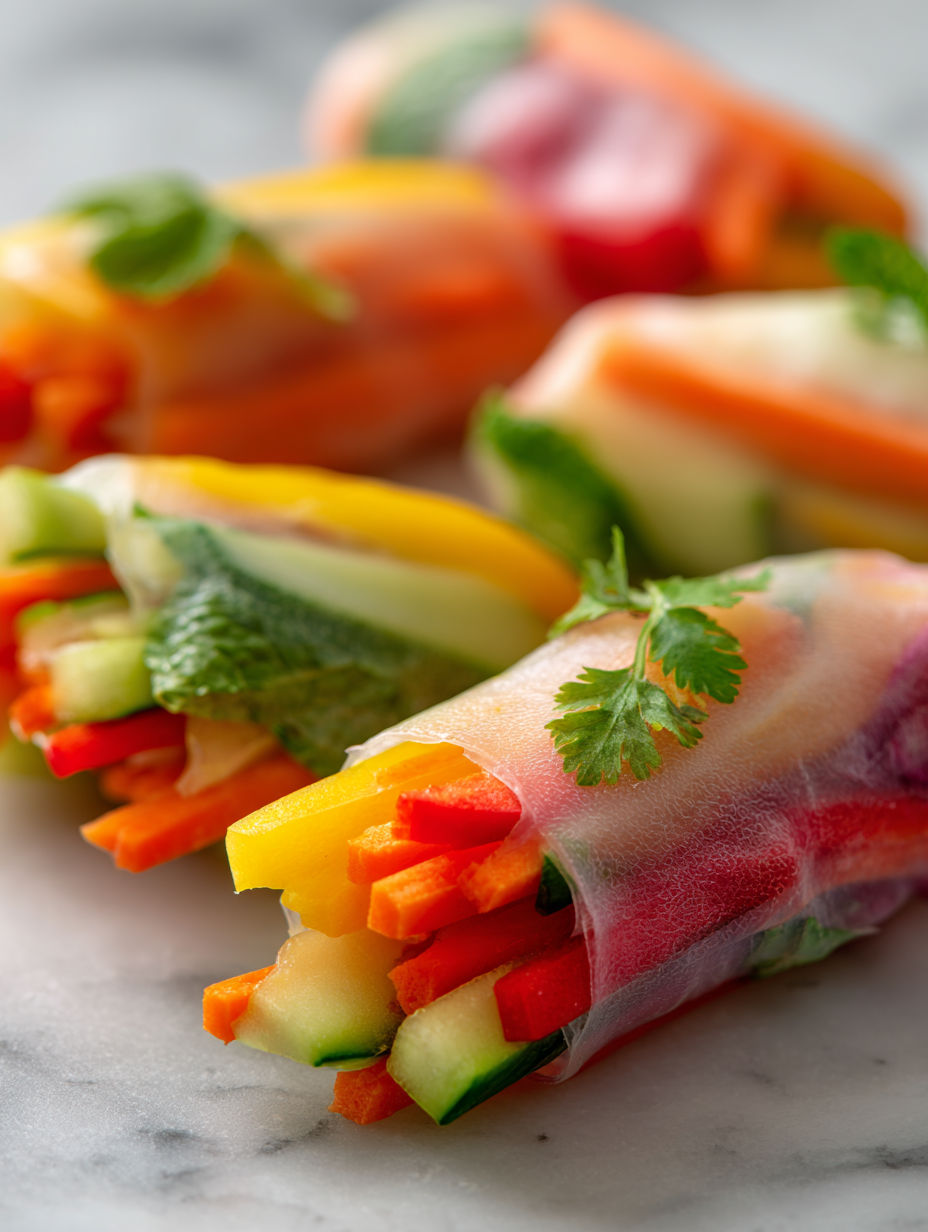
Vegetable Spring Rolls
Ingredients
Equipment
Method
- Begin by preparing all your vegetables: shred the carrots, seed and slice the cucumber into thin strips, and thinly slice the red pepper. Have your herbs ready for easy assembly.
- Fill a large shallow dish with warm water, about 40°C (105°F). Dip one rice paper sheet into the water for about 5 seconds until it becomes translucent and just pliable—don’t soak too long or it will tear.
- Lay the softened rice paper flat on a damp towel. Place a small handful of shredded carrots, cucumber strips, and red pepper near the bottom third of the sheet.
- Add a few sprigs of cilantro and mint over the vegetables for a burst of fragrant freshness.
- Fold the sides of the rice paper inward, then carefully roll from the bottom, keeping the filling snug but not overstuffed. Seal the edge with a gentle press to secure.
- Place the completed roll on a plate and repeat the process with the remaining sheets and fillings. Cover finished rolls with a damp towel to keep them moist.
- Serve immediately with a side of soy and rice vinegar dipping sauce for a perfect balance of savory and tangy flavors. For best texture, enjoy the rolls within 2 hours of making.
Notes
Tips for perfect spring rolls
- Use warm water to soften rice paper just enough to make it pliable without tearing—look for translucence and flexibility.
- Shred carrots finely; coarser julienne can make rolling uneven and difficult to manage—aim for even, manageable strips.
- Seed cucumbers thoroughly to avoid excess water that can make your rolls soggy—less watery, more satisfying crunch.
- Lightly char red peppers over an open flame or under a broiler for smoky sweetness before slicing—adds depth to raw crunch.
- Generously pack herbs like cilantro and mint for a fragrant, lively aroma—don’t be shy, they really brighten each bite.
- Keep finished rolls covered with a damp cloth if not serving immediately—prevents drying out and keeps textures crisp.
- Slice rolls diagonally just before serving to showcase vibrant colors and ensure a clean, attractive presentation.
Common mistakes and how to fix them
- TOO MUCH FILLING: Keep filling light to prevent tearing or overstuffing, which makes rolling tricky.
- WRONG WATER TEMP: Use warm water (not hot) to soften rice paper without tearing or sticking.
- ROLLING TOO TIGHT: Slightly looser rolls prevent cracking and make dipping easier.
- INCONSISTENT SLICING: Cut rolls diagonally for neat presentation and even texture distribution.
Quick Fixes and Pantry Swaps
- If rice paper cracks, splash it with more warm water and gently re-soak for 2 seconds.
- When filling feels overstuffed, dump some out to prevent tearing during rolling.
- Over-torched peppers? Patch with a squeeze of lemon juice to revive smoky sweetness.
- Splash extra soy sauce if dipping feels bland; it shimmers with salty umami.
- When rolls stick, pantry swap: use rice vinegar instead of soy for a tangy lift.
Prep, store, and reheat tips
- Prep all vegetables: chop cucumbers, shred carrots, and gather herbs the night before to save time and keep ingredients crisp.
- Wrap completed rolls in plastic wrap and refrigerate for up to 2 hours; the cooler, the crunchier and fresher they stay.
- Store dipping sauces separately in airtight containers; they taste best fresh but can be refrigerated for up to 3 days, losing a bit of brightness.
- Reheating isn’t necessary—these are best served cold or at room temperature. If you prefer slightly warmer, a quick 10-second microwave dip works, but expect some sogginess.
- For longer storage, freeze the rolls for up to 1 month, but note they will lose some of their fresh crunch upon thawing.
Top questions about vegetable spring rolls
1. How do I soften rice paper without tearing?
Use warm water (around 40°C / 105°F) to soften rice paper until it’s translucent and pliable, about 5 seconds. If it tears, soak a bit longer but don’t let it get too soft.
2. Should I shred or julienne the carrots for best texture?
Shred carrots finely for even crunch and easier rolling. Coarser julienne strips can be more difficult to manage and may cause tearing.
3. How do I keep the rolls from getting soggy?
Seed cucumbers thoroughly to remove excess water, which can make the rolls soggy. Use fresh, crisp cucumbers for a satisfying crunch.
4. Can I add cooked or charred peppers?
To add smoky sweetness, briefly char red peppers over an open flame or under a broiler until blackened, then slice and add raw for a contrast in flavor and texture.
5. How much herbs should I add?
Use a generous amount of herbs like cilantro and mint. Their fragrant, lively aroma really enhances each bite, making the rolls taste vibrant and fresh.
6. Can I make these ahead of time?
Serve immediately for best crunch and freshness. If preparing in advance, cover with a damp cloth and refrigerate for up to 2 hours. Avoid freezing, as it ruins texture.
7. How do I prevent tearing during rolling?
When rolling, don’t overstuff the rice paper. Keep the filling snug but not tight enough to tear the paper when you roll from the bottom.
8. How should I cut the rolls for presentation?
Slice the rolls diagonally just before serving for an attractive presentation that showcases the vibrant colors and crisp textures.
9. What if my rice paper is too stiff?
If the rice paper feels too stiff, soak it a few seconds longer in warm water until it reaches the right softness—look for translucence and flexibility.
10. How do I cut the rolls without squishing them?
Use a sharp knife to cut the rolls cleanly, avoiding squishing the filling. A gentle, firm slice works best for neat presentation.
These spring rolls aren’t just a snack—they’re a reminder that simple, fresh ingredients can come together in a way that’s satisfying and lively. Making them feels like a small act of mindfulness, a moment to slow down and appreciate the crunch and brightness of each bite.
Whenever I crave something light but flavorful, I turn to these. They’re perfect for sharing, for using up odds and ends in the fridge, or just for a quick, honest bite that keeps the season’s best produce front and center.

Hi, I’m Lily Hayes, the cook, writer, and heart behind Loving This Process. This blog is built on a simple idea that food is not just about the final dish, but about everything that happens while you’re making it. The thinking, the tasting, the adjusting, the learning, and the quiet moments in between. Food has been a constant presence in my life, not as something flashy or perfect, but as something deeply grounding. Cooking has always felt like a process worth savoring, even when it’s messy, slow, or imperfect.
Leave a Reply